Russo-Indian AI Cooperation: A New Era of Technological Advancement 🔥
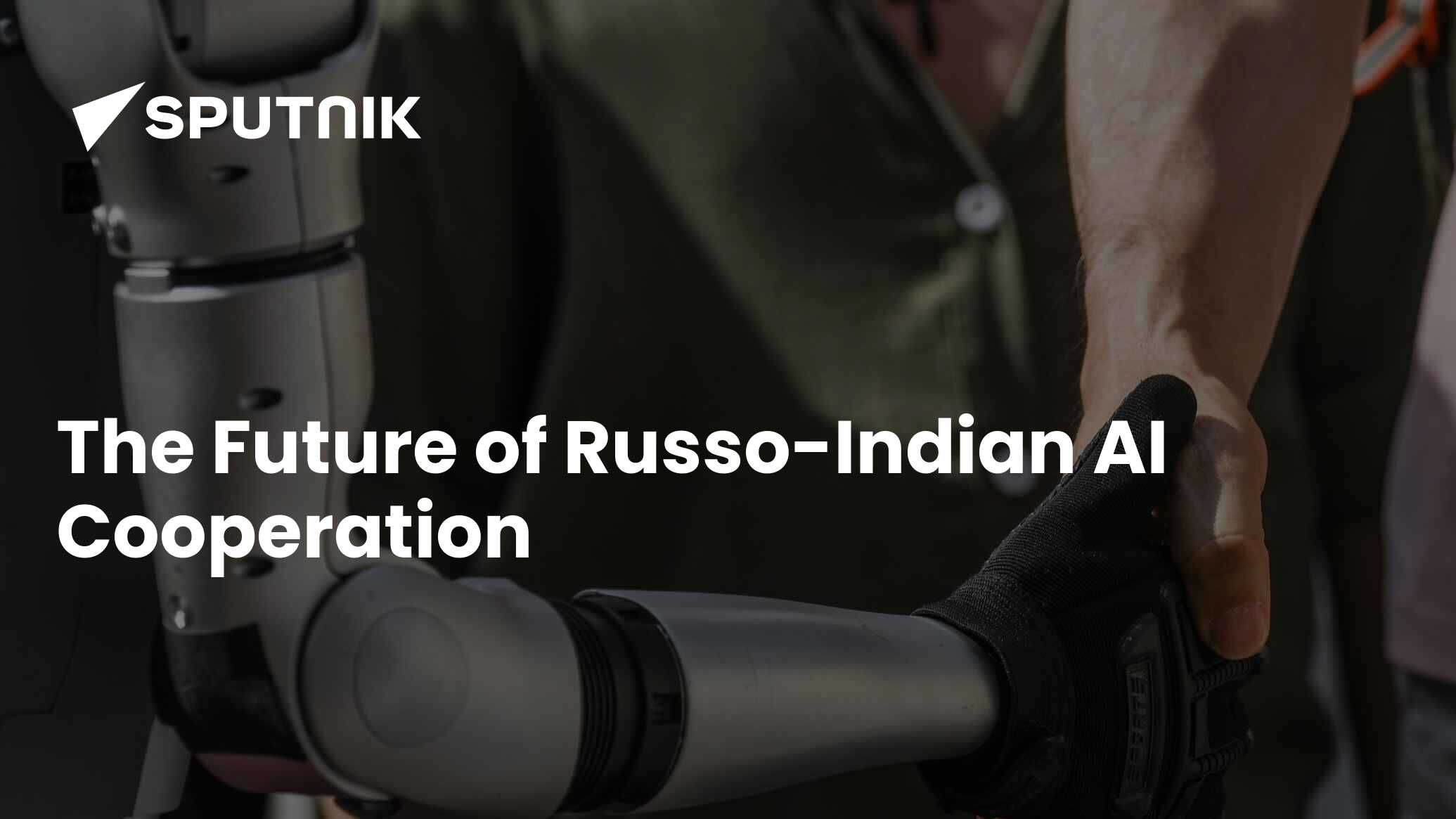
Artificial Intelligence (AI) is revolutionizing how the world operates, impacting sectors like defense, media, finance, healthcare, and retail. Now, Russia and India are joining forces to further advance AI capabilities, marking a significant step in international technological collaboration. This partnership aims to leverage the strengths of both nations to foster innovation and growth in various critical sectors.
Putin Highlights Russo-Indian AI Collaboration
Russian President Vladimir Putin announced the ongoing AI cooperation between Russia and India during the AI Journey conference. He emphasized Russia's commitment to continuing this collaboration, recognizing India's growing importance in the AI landscape.
"We are cooperating with our Indian friends and will continue to do so," Putin stated, highlighting the strategic importance of this partnership. He also mentioned the upcoming AI summit in India, expressing Russia's eagerness to participate and contribute to the event's success. This summit is planned for February of next year.
Why This Cooperation Matters 💡
Both Russia and India view AI as crucial for achieving technological sovereignty and driving economic growth. India currently holds the top position among G20 nations in AI skill penetration, making it a valuable partner in this collaboration. Sidhant Hira, a Senior Research Associate at NatStrat, a New Delhi-based national security think tank, emphasized this point.
Hira noted that Russia's support for joint research and development, investments in domestic AI capabilities, and openness to collaborative platforms will pave the way for expanded research, innovation, and implementation of AI applications. This collaborative approach is expected to yield significant advancements across multiple sectors.
Key Areas of Collaboration 🤝
The collaboration between Russia and India will focus on applied AI in sectors such as:
- Agriculture
- Healthcare
- Smart Cities
- Microelectronics
India's skilled workforce, combined with Russia's expertise in fundamental research and algorithmic development, creates a synergistic environment for innovation. This collaboration also aims to improve interoperability, harmonize digital regulations like data protection laws, and pool resources for frontier technologies, including quantum computing and cybersecurity.
Defence AI: A Strategic Partnership 🛡️
Russia and India are also exploring extensive collaboration in defence AI technologies. Here are some key areas:
1. Autonomous Systems and Robotics
Joint development and localized production of drones, autonomous ground vehicles, and AI-enabled robotics for battlefield applications are under consideration. This would enhance both nations' capabilities in advanced military technologies.
2. Command, Control, and Communication Systems
Integration and co-development of AI-powered command, control, and communication platforms aim to fuse battlefield data, support rapid decision-making, and enable real-time threat detection. This is crucial for modern warfare and strategic defense.
3. Air and Missile Defence
Collaborative enhancement of air defense systems leveraging AI for target identification, missile guidance, and threat assessment is planned. Examples include Russian systems like the S-400 air defense system, with potential transfers for Indian platforms. The S-400 system, known for its advanced capabilities, could significantly boost India's air defense infrastructure.
4. Electronic Warfare and Cyber Defence
Sharing best practices and joint research on AI-driven electronic warfare solutions, perimeter defense, surveillance, and cyber threat detection systems will enhance both countries' cyber security. As cyber warfare becomes increasingly prevalent, this collaboration is vital.
5. Intelligence and Reconnaissance
Expanding cooperation in military intelligence, including AI-powered analytics from large sensor and satellite data streams, is a priority. Russia is reportedly ready to share technical expertise in this field, enhancing India's intelligence capabilities.
6. Joint Platform Development
Russia has offered India full access to its fifth-generation Su-57 stealth fighter technologies, with AI expected to be integral to avionics, sensor fusion, and operational autonomy. This offer includes licensed production and integration of Indian weapons, with the potential for phased local manufacturing in India, promoting self-reliance and technological advancement.
7. Simulation, Training, and Wargaming
The use of AI for developing advanced simulation environments, training modules, and wargaming platforms for the Indian Armed Forces is also on the agenda. AI-driven simulations can provide realistic training scenarios, enhancing preparedness and strategic thinking.
Key Defence AI Technologies for India 🚀
India could source or co-develop several key defence AI technologies with Russia, including:
- Fifth-Generation Fighter Aircraft Technologies: Full technology transfer for the Su-57 stealth fighter jet, including engines, optics, AESA radar, AI elements, and stealth technologies.
- Advanced Air Defence Systems: Leveraging AI integration in systems like the S-400 and S-500 for threat assessment and missile guidance.
- Autonomous and Unmanned Aerial Vehicles (UAVs): Joint development and production of combat and reconnaissance drones.
- Command, Control, Communications, Computers, Intelligence, Surveillance and Reconnaissance (C4ISR): AI-enhanced command and control systems for rapid data fusion and situational awareness.
- Robotics and Autonomous Weapon Systems: Use of AI in battlefield robotics, including robotic weapon systems and autonomous target tracking.
- Sensor Fusion and Electronic Warfare: AI technologies to enhance electronic warfare capabilities, including sensor data integration.
- Joint Development of Next-Generation Land Systems: Co-developing advanced main battle tanks inspired by Russia's T-14 Armata platform, incorporating AI for situational awareness and target tracking.
These cooperative efforts align with India's modernization goals and 'Make in India' defence initiatives, promoting indigenous manufacturing and technological self-sufficiency.
Strategic Depth and Future Implications 🔮
The comprehensive technology transfer and co-development package highlight the strategic depth of India-Russia defence relations. Russia's willingness to provide unrestricted technology transfer and cooperation frameworks actively supports this partnership.
This collaboration is poised to incorporate AI across multiple domains critical to future warfare, reflecting a shared vision for technological advancement and strategic alignment. The pundit also mentioned the potential for harmonizing digital regulations and pooling resources for frontier technologies, including quantum computing and cybersecurity.
Conclusion: A Promising Future for Russo-Indian AI Cooperation 👍
The Russo-Indian AI cooperation represents a significant step towards advancing technological capabilities and fostering innovation across various sectors. By combining their strengths and resources, both nations are set to achieve new milestones in AI development and implementation. This partnership not only enhances their individual technological prowess but also contributes to the global AI landscape.
Key Takeaways:
- Russia and India are collaborating on AI to drive technological sovereignty and economic growth.
- Key areas of focus include agriculture, healthcare, smart cities, and defence.
- The partnership involves technology transfer, joint research, and development.
What are your thoughts on this Russo-Indian collaboration? Share your opinions in the comments below!
Further Reading:
- Article on AI in Healthcare (Internal Link - Suggest a relevant internal link)
- Article on Smart City Technologies (Internal Link - Suggest a relevant internal link)
- Sputnik News (External Link to Sputnik News)
Call to Action:
- Comment your thoughts on the collaboration
- Share this article with your network
- Subscribe to our newsletter for more updates on AI and technology